
To measure for a wedding dress, you will need a soft measuring tape and an assistant for the most accurate results. While you should always consult the specific designer’s size chart, the three most critical measurements are the bust, waist, and hips.
Before you begin
- Wear the right undergarments: Take measurements while wearing the bra and shapewear you plan to wear on your wedding day for the most accurate fit.
- Stand up straight: Relax your body, keep your arms at your sides, and do not hold your breath or suck in your stomach.
- Measure twice: Take each measurement at least two times to ensure accuracy.
How to take your measurements
Bust
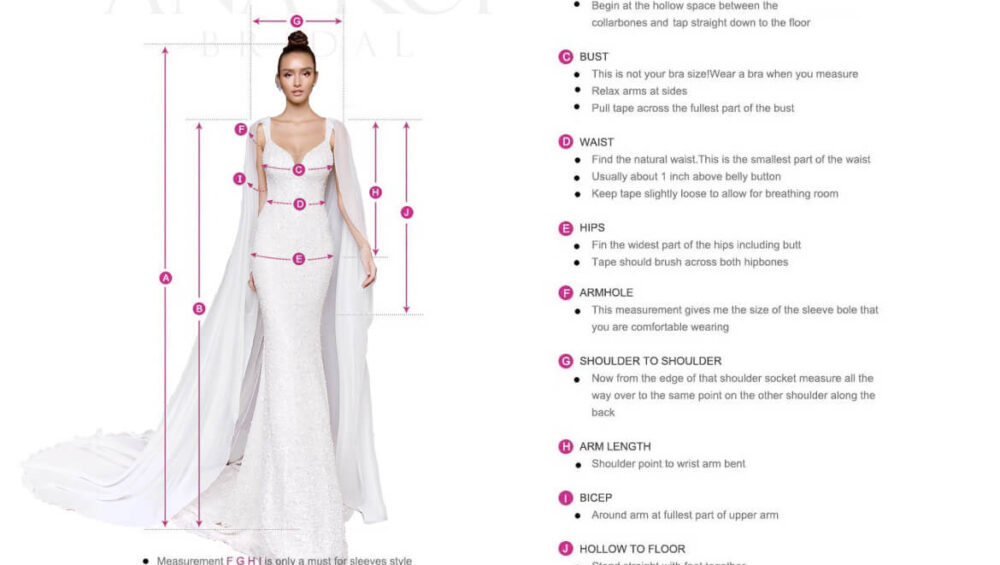
- Wrap the measuring tape around your back, underneath your armpits, and across the fullest part of your chest, usually at the nipple line.
- Make sure the tape lies flat across your back and is parallel to the floor.
- The tape should be snug but not tight—you should be able to fit a finger underneath it.
Waist
- Bend to the side to find the natural crease in your torso. This is your natural waist, typically the narrowest part of your body.
- Wrap the measuring tape around this narrowest point, keeping it level all the way around.
- Keep the tape comfortable, with enough room to breathe normally.
Hips
- Stand with your feet together.
- Wrap the measuring tape around the fullest part of your hips and buttocks.
- Ensure the tape is parallel to the floor. For some styles, you may also be asked to measure at the low hip, which is about 8 inches below your natural waist.
Hollow-to-hem (for length)
This measurement is for floor-length dresses and determines the proper length.
- Stand up straight and look forward.
- Measure from the hollow at the base of your neck (between your collarbones) straight down to the floor.
- Crucially, wear the shoes you intend to wear on your wedding day, or a pair with the same heel height.
Other measurements
Depending on the dress style, you may need additional measurements.
- Sleeved dresses: Measure the circumference of the fullest part of your upper arm.
- Specific necklines: For custom dresses, you may need to measure from the shoulder to the bust point.
Using your measurements
Once you have your numbers, compare them to the designer’s specific size chart.
- Bridal sizing runs small: Your wedding dress size is often one or two sizes larger than your regular street clothes.
- Order the largest size: If your measurements fall into different size categories, order the size that accommodates your largest measurement. It is easier for a tailor to take a dress in than to let it out.
- Consider alterations: A larger size will ensure the dress fits comfortably, and a professional tailor can make precise alterations for a perfect fit.